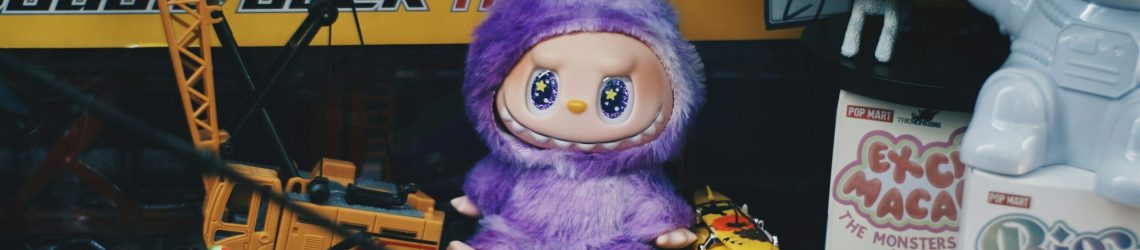

Something has shifted in how adults consume.
Over the past few years, nostalgia has become one of the most powerful cultural forces shaping brands. We see it everywhere: heritage revivals, archive reissues, and the steady return of the 90s and early 2Ks across fashion, food, beauty and retail.
2025 the defining moment
We explored this broader movement in depth in The Past Is Working Overtime ARTICLE; But within this wider nostalgia wave, a more specific, more emotional form has accelerated sharply since 2024.
Softer. Simpler. Playful by design.
This is regressive nostalgia.
Regressive nostalgia did not appear overnight. Early signals emerged when brands began giving adults permission to re-enter childhood worlds without irony. Larger-format chocolate bars positioned explicitly “for grown-ups”, like Kinder Maxi. Play systems reframed as mindful adult hobbies, such as LEGO’s Adults Welcome. Campaigns that placed adult bodies back into childlike emotional states, including Haribo’s Kids’ Voices. Even the Barbie movie demonstrated how deeply childhood IP could be reclaimed by adults without apology.
But 2025 was the tipping point.
This was the moment regressive nostalgia moved from emergent to dominant. From a subcultural wink to a mainstream mode of design, flavour, packaging and experience. What once felt playful and marginal became a system.
At its core, regressive nostalgia borrows the sensory and emotional conditions of childhood to cope with an adult world that feels increasingly heavy. These cues are no longer confined to toys.
Zillennials sit at the centre of this shift. Old enough to remember analogue childhoods, young enough to feel the full weight of digital adulthood, they are embracing kidult culture openly. Buying child-coded objects. Displaying them. Collecting them. Using them as tools for emotional regulation.
The scale is undeniable. In 2024, kidults represented 29 percent of annual toy sales in France, generating 1.3 billion € in revenue, with sales up seven percent despite a declining market. In 2023, 40% of European adults bought toys for themselves.
What looks like regression is, in fact, a response.
Regressive Nostalgia as behaviour
At its core, regressive nostalgia is behavioural.
It shows up when adults buy or use products that look and feel like they belong to children, even when the category is clearly adult: beauty, personal care, food, fashion, even luxury. The emotional promise is relief. Low-stakes joy. Temporary safety.
The underlying myth is simple: growing up is optional. You can rewind when life feels too much. The famous “Quit Adulting”
The data supports this reframing. Kidults now account for a disproportionate share of growth in play and collectibles. Board games and puzzles grew 36% globally in the first half of 2025. Licensed products already represent 35% of global sales, showing how familiar characters and worlds have become emotional anchors across categories.
Why CPG is the first place regression shows up
If regressive nostalgia is emotional, CPG is its most natural host.
Food, drink, beauty and personal care live inside daily rituals. They already carry childhood memory. They are low-cost, high-frequency touchpoints where emotional experimentation feels safe.
We saw this clearly during the recent advent calendar cycle. Adult advent calendars across beauty, food and alcohol have evolved into ritualised self-care formats, formalising daily “little treats” into moments of anticipation. Opening a door. Collecting a set. Delaying gratification.
These are not childish mechanics. They are structured comfort.
Food and Drinks: Flavours and Games as emotional time travel
In food and drink, regressive nostalgia surfaces through what can best be described as new-stalgia flavours: profiles borrowed from childhood, reframed with adult alibis or self-aware humour.
Root beer. Cream soda. Orange-and-cream. Cola. Bubblegum. Strawberry milk. Vanilla. Chocolate. These are not complex tasting notes. They are emotional shortcuts.
Gamification plays a critical role in this return to … 40years ago. Platforms like Coca-Cola Creations have turned beverages into collectible drops rather than static SKUs. Limited editions such as Y3K or Byte are wrapped in experimental graphics and AI- or AR-enabled experiences, giving adults permission to treat a Coke like a toy, a game, a moment of play.
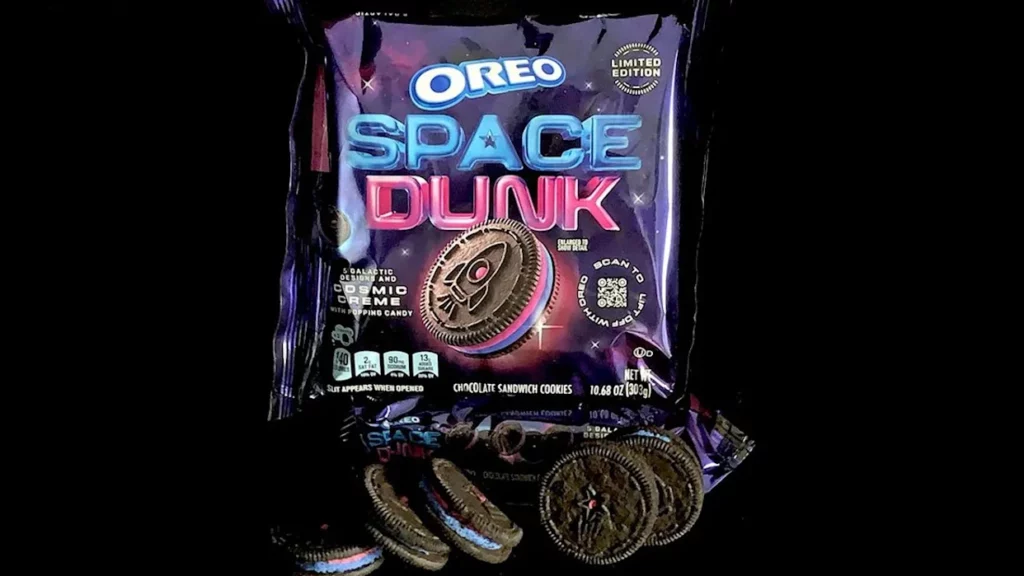
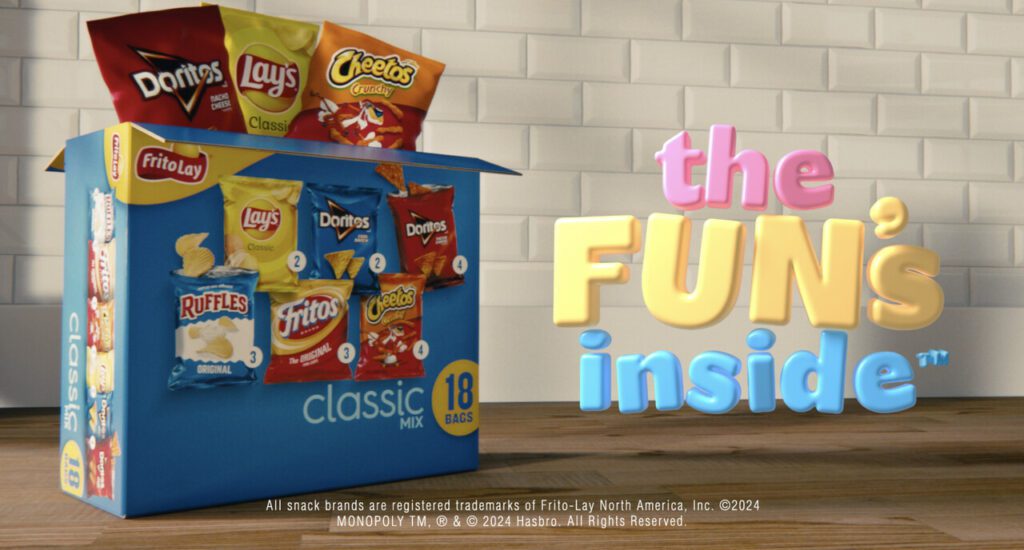
Snacks follow the same logic. Oreo’s Space Dunk transformed packs and embossed cookies into gateways for a 3D mobile game. Frito-Lay’s collaboration with Hasbro turned everyday crisps into a playable version of The Game of Life.
In each case, the product becomes both reward and ritual.
Beauty and Personal Care: From repair to play
If food and drink offer sensory comfort, beauty and personal care are where regressive nostalgia becomes fully liberated.
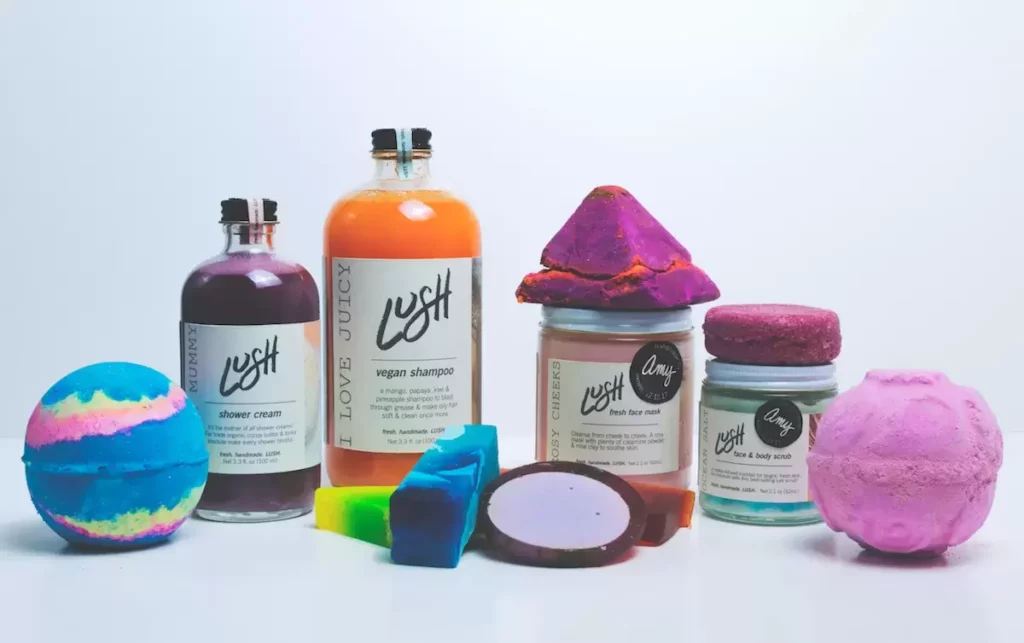
This is the category where childish codes are no longer constrained by seriousness or clinical authority, especially for Indie Brands. Textures turn whipped or jelly-like and Colours go candy-bright.
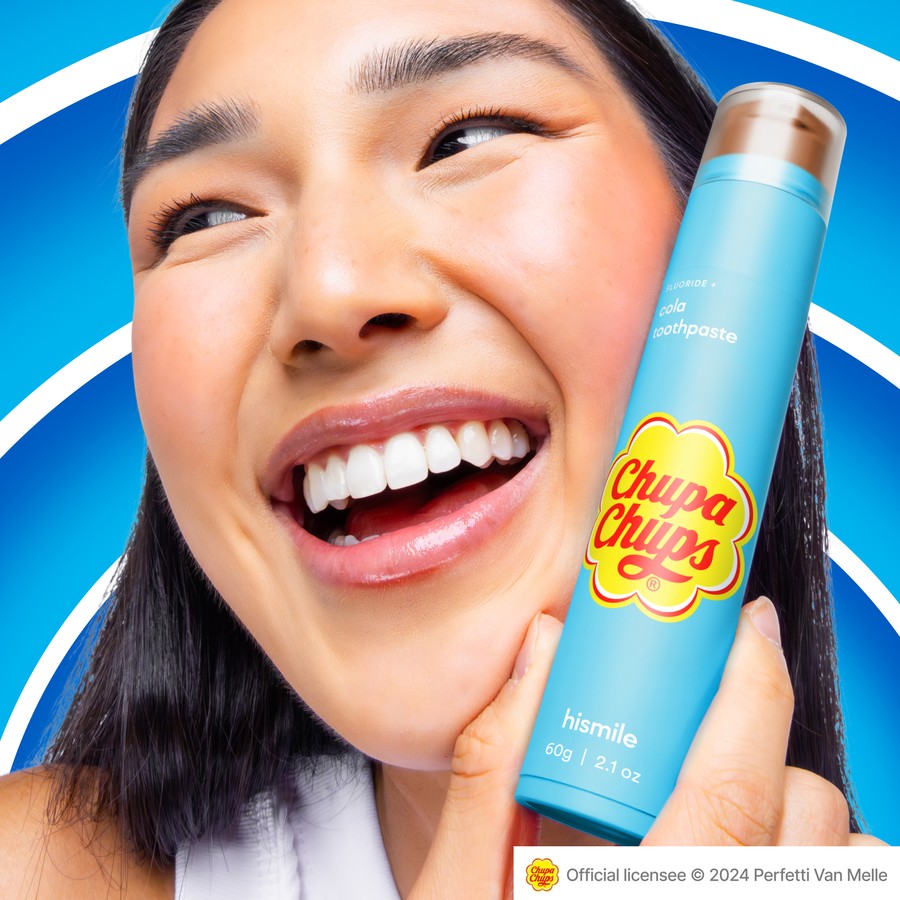
We see this clearly in limited-edition collaborations and brand worlds built entirely on graphic nostalgia. Hismile regularly launches toothpaste flavours and packaging inspired by childhood icons, from Barbie to Chupa Chups, collapsing candy culture and daily hygiene into a single playful ritual.
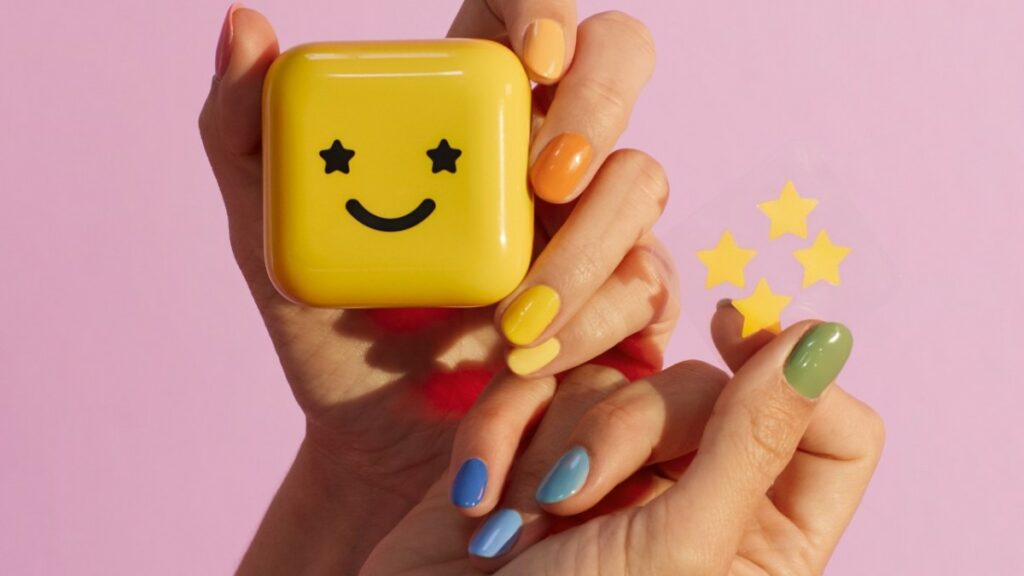
Other brands are built almost entirely on this code. Hula Hoops, Touchland, Merci Handy and Dear Doer use candy-shop colour, rounded forms, smiley iconography and collectible formats to turn everyday care into emotional accessories.
Haircare brands are also leaning into play to drive engagement, recognising that joy and escapism now differentiate where efficacy is assumed.
When emotional regulation becomes a daily need, these products become tools for feeling safe, soothed and lightly entertained.
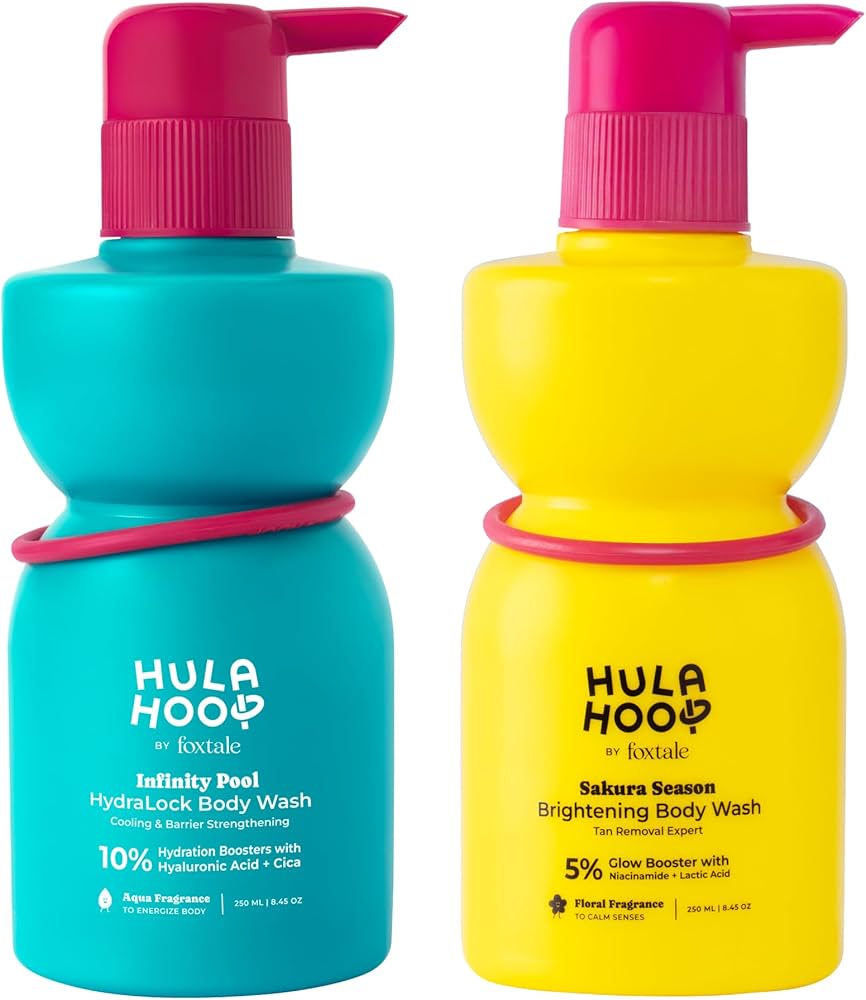
The semiotics of Regressive Nostalgia
Visually, regressive nostalgia follows a clear code system.
- Candy-shop colour dominates. High-chroma pinks, turquoise, lime and sherbet orange appear in bold mono-colour blocks. Borrowed from confectionery, these palettes pushes to an instant mood lift rather than literal sweetness.
- Squishy, toy-like forms follow. Rounded bottles, jelly textures and plush materiality echo toddler toys and stress balls, turning everyday products into emotional comfort objects.
- Face-ification and character worlds transform packs into companions. Mascots and smiley icons invite affection and collecting. Products are no longer inert. You interact with them.
- Dessert metaphors migrate into non-food categories. Whipped textures, frosting swirls and sweet naming replay childhood indulgence in a calorie-free, adult register.
Importantly, this is no longer niche. As outlined in our Graphic Design Trends 2026 report, softer, playful, emotionally legible visual languages are becoming part of mainstream design systems.
Lifestyle, Retail and Luxury legitimate regression
Once these codes move beyond CPG, regression becomes culturally safe.
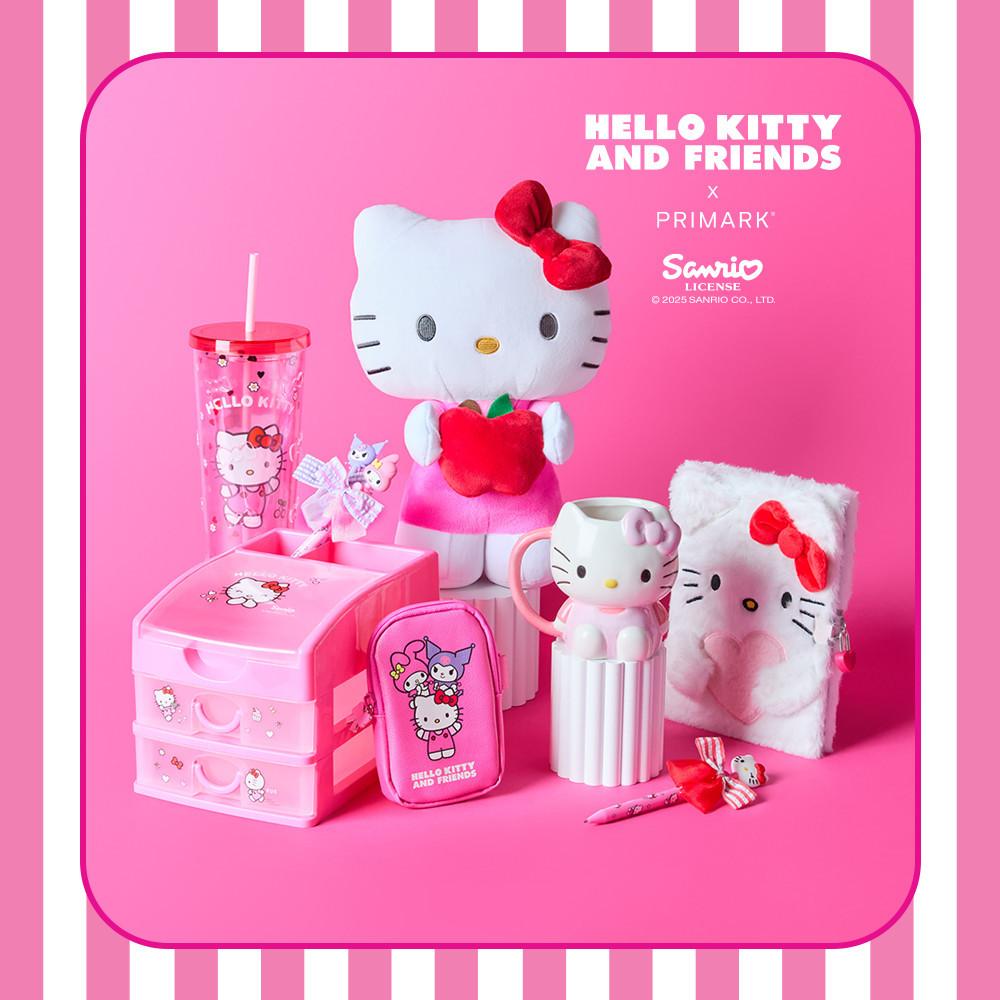
High-street brands like Primark normalise character IP and nostalgic collaborations for adults. Department stores such as Harrods turn retail into spectacle through plush installations and toy-like worlds.
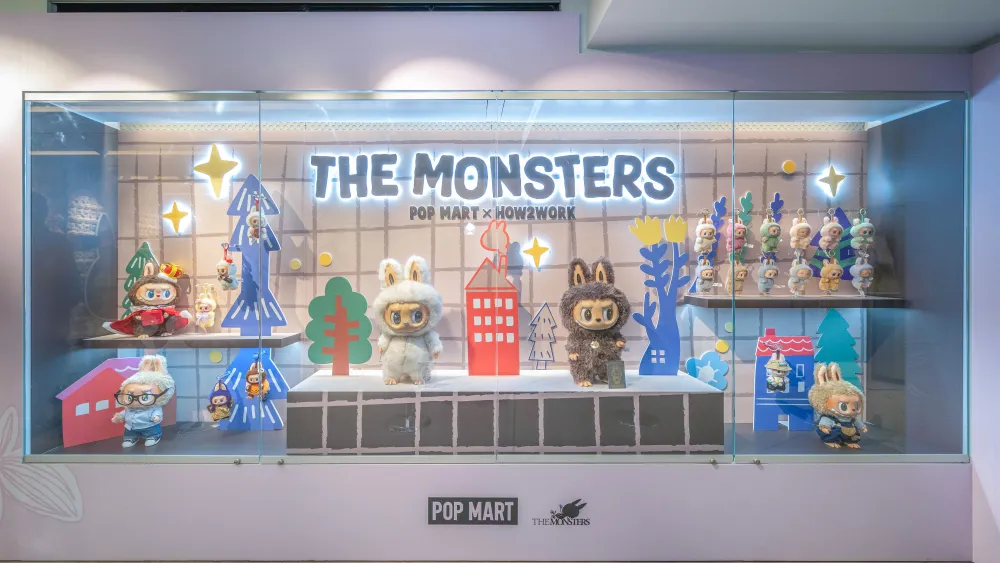
Luxury follows. High–low mash-ups introduce plush charms, Labubu figures and playful avatars into heritage spaces. LEGO’s collaboration with Crocs signals how explicitly play is now legitimised in adult contexts.
Even fast-food leans in. McDonald’s Adult Happy Meal with Cactus Plant Flea Market distilled kidult culture perfectly: childish ritual, adult hype, collectible objects.
When everyone adopts the codes, no one can see it as childish.
When nostalgia backfires
There is, however, a line brands cannot afford to cross.
Nostalgia works when it carries intent. Pushed too far into childlike cues without meaning, it quickly feels hollow. Consumers want more than a memory. They want wit, self-awareness and a reason why the past is resurfacing now.
The renewed pull of comfort food and childhood flavours is directly tied to the weight of the world we are living in. In an era of polycrisis, reassurance matters. Childhood memories resonate not because they are cute, but because they felt safe.
What it means for brands
Regressive nostalgia is not about refusing adulthood.
It is about surviving it.
This is why hybrids work. Ice-cream-and-wine bars collapse childhood pleasure and adult permission into a single moment. Without that tension, nostalgia becomes pastiche. With it, nostalgia becomes intelligent comfort.
Brands offering softness, play and emotional safety are culturally literate.
Growth is no longer driven only by novelty, performance or progress narratives. It is increasingly driven by how a product makes people feel in use,
The opportunity, then, is to design emotional contrast. To pair seriousness with softness. Credibility with comfort. Function with feeling. The most effective expressions of regressive nostalgia work because they hold tension: adult price points with childlike joy, science with sweetness, heritage with humour.
Reach out to us
If you want to explore how regressive nostalgia could translate into your brand, packaging or activation strategy, INTERCULT BRANDS decodes cultural signals with clarity and care.
Let’s talk!